


The Washington Manual
4.96.00 Reviews
App Specs
- Version
- 2.8.52
- Updated On
- License
- Free
- Downloads
- 10,000+
- Developer
- Unbound Medicine, Inc
- Categories
- Medical
- Platform
- Android
Screenshots
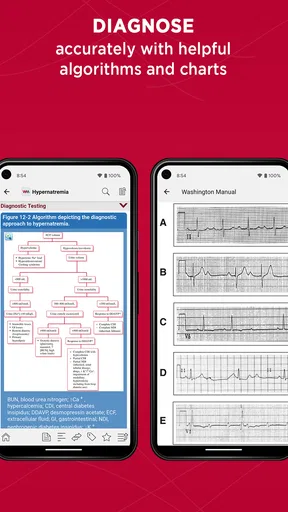
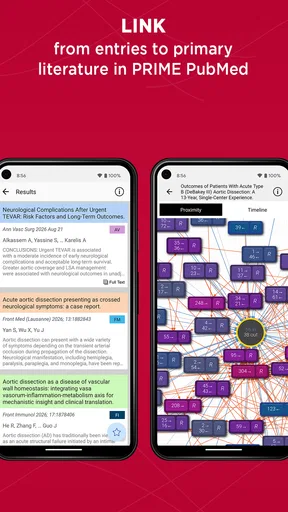
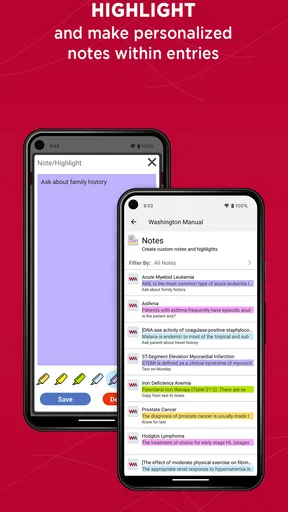
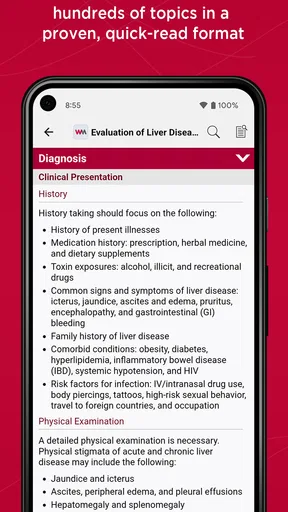
 Analysis by AppCompare
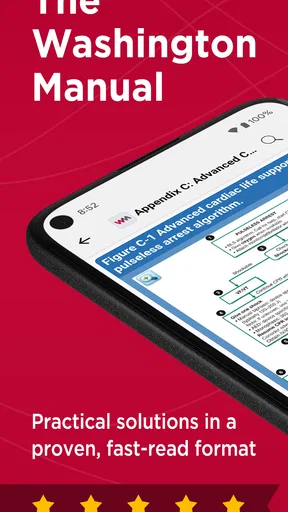
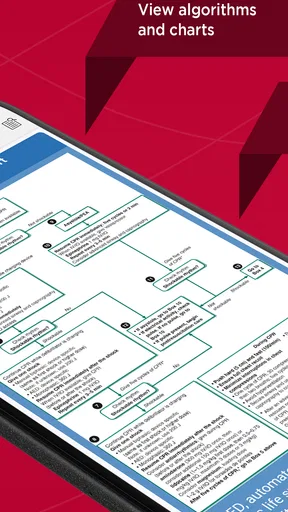
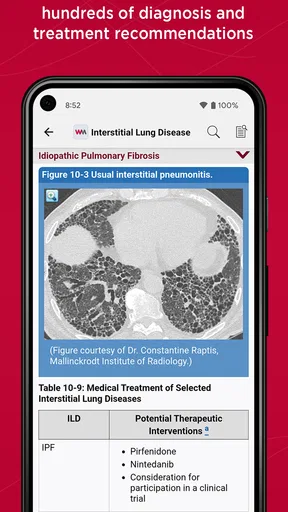
I approached The Washington Manual as a pocket reference rather than a general health app, and that distinction matters from the first tap. This is a medical app built around the Washington Manual of Medical Therapeutics, developed by Unbound Medicine, Inc. Its purpose is to help readers look up clinical information quickly, especially when a compact reference is more practical than carrying a printed medical textbook.
My overall impression is that it is most useful for medical students, trainees, nurses, and clinicians who already understand basic medical language. It is not designed to replace a consultation, a full clinical assessment, or local treatment guidance. Instead, it works best when I need to refresh a topic, check a therapeutic approach, or orient myself before reading more deeply elsewhere.
The app is free to install and has an Everyone age rating, which makes it easy to try. However, its in-app purchases range from $79.99 to $99.99 per item, so the free entry point should not be confused with unlimited access to every part of the reference. That pricing structure is one of the first things I would consider before recommending it to a casual learner.
How the reference feels to use
I find the reference most useful when I treat it as a focused place to begin, not as a shortcut to a clinical decision. That approach helps me keep a lookup tied to a clear question and notice when I need a broader source or local guidance. It also sets up the practical question of how to use a concise medical reference carefully when time is limited.
Readable organization for people who already know the language
The strongest accessibility feature here is conceptual rather than decorative: the content is arranged as a professional medical reference, so a knowledgeable reader can approach it with a clear purpose. If I am looking for therapeutic guidance connected to a familiar condition, I do not need the app to teach me what every medical term means before I begin. That makes the experience efficient for trained users.
At the same time, the same organization can be demanding for newcomers. Medical references often compress a great deal of meaning into headings, abbreviations, drug names, and clinical distinctions. A reader who is not comfortable with that vocabulary may find the material difficult even if the text itself is legible. I would not choose this as a first introduction to medicine for a general audience.
The app’s value depends heavily on focused reading. I get more from it when I begin with a specific question instead of browsing without a plan. For example, a student preparing for a ward discussion might use it to review the therapeutic framework for a condition already covered in class. That is a better fit than opening it casually and expecting a guided course.
Worth Reading Before You Choose

Flipboard Shows What News Apps Must Do Beyond the Feed

Switching to Android Auto Means Rethinking Your Driving Routine

Google Calendar Makes a Crowded Week Easier to Manage

Ludo King Makes the Most of the Minutes Between Plans

Baby Panda World Brings Quick Play to Modern Phones, but Its Game Library Feels Busy

ESPN’s Live Game View Makes Following Close Games Easier
One practical habit makes a noticeable difference: I would decide whether I am using the reference for rapid confirmation or for sustained study before searching. Rapid confirmation calls for a narrow query and careful attention to the surrounding context. Sustained study requires slower reading, because jumping directly to an isolated phrase can hide the assumptions and clinical boundaries around it.
Navigation rewards a deliberate workflow
I found the app easier to judge when treating each lookup as a small workflow. First, I identify the clinical topic. Next, I read beyond the first matching result instead of stopping at a single line. Finally, I compare what I found with the patient’s actual context and with the guidance used by the relevant institution. That sequence reduces the risk of turning a reference entry into an automatic instruction.
This is also where the app compares favorably with a general web search. A search engine may return scattered pages, advertisements, patient-facing explanations, and outdated discussions alongside useful material. The Washington Manual is narrower and more purposeful. Its limitation is that it does not offer the same breadth of viewpoints or the same immediate variety of formats that a web search can provide.
For students, the narrow focus can be a benefit. Instead of sorting through unrelated results, I can use the manual as a starting point for a defined therapeutic question. For experienced clinicians, it may function as a quick refresher. For patients, however, the specialized structure may make a general health resource or a direct conversation with a qualified professional more understandable and safer.
Text-heavy content and different reading abilities
A text-centered medical reference naturally favors people who can read dense material comfortably and maintain attention while moving between related concepts. Someone with dyslexia, reduced concentration, or limited familiarity with English medical terminology may need more time and a separate tool for definitions. I would not assume that a professional reference automatically provides plain-language support simply because it is available on a phone.
My advice for readers who process information slowly is to use it in short, intentional sessions. Write down the exact question before opening the app, read one topic at a time, and keep a separate note of unfamiliar terms. This approach is less tiring than trying to absorb the whole subject through continuous scrolling, and it makes later review more manageable.
The app is also more suitable for readers who can distinguish reference information from individualized medical advice. That is an important form of health literacy. A concise therapeutic discussion can be useful in education, but it cannot account for allergies, pregnancy, kidney function, interactions, local protocols, or the details of a particular patient unless those factors are assessed separately.
Motor and sensory considerations
On a phone, the main physical advantage of a reference like this is portability. I can consult a medical resource without handling a large book, which may help someone who finds printed volumes heavy or awkward. A mobile format can also be convenient when a desk is unavailable or when I need to keep other materials nearby.
That convenience does not remove every motor barrier. Medical reading often involves repeated tapping, scrolling, and returning to earlier sections. Users with tremors, limited dexterity, joint pain, or fatigue may find long lookup sessions uncomfortable. I would use the app in brief searches rather than assuming that a phone-based format is automatically easier for every hand or posture.
Screen-based reading can also create sensory challenges. People with low vision, light sensitivity, headaches, or difficulty sustaining focus may prefer a larger display or a printed reference for extended study. A tablet or other larger screen could make dense passages easier to follow, but I would treat that as a practical adjustment rather than a guaranteed solution. The experience will still depend on the device, operating system, and the reader’s own settings.
For users with hearing loss, the nature of the app is potentially helpful because the core task is reading rather than listening. Someone who cannot rely on audio explanations is not excluded by a reference whose main purpose is written consultation. On the other hand, readers who depend on spoken content may find a text-heavy medical manual less convenient than a resource designed around audio or simplified explanations.
I would also avoid using the app while walking, driving, or performing a clinical task that requires full attention. The ability to carry a reference in a phone does not make distracted reading safe. In a busy hospital environment, I would stop in a suitable place, complete the lookup deliberately, and then confirm the result using the appropriate local process.
Access when time, connection, or setting changes
The most convincing everyday scenario is a student moving between classes, a library, and a clinical placement. A printed manual may be too bulky for that routine, while a general browser search can be noisy and inefficient. A dedicated medical reference gives that student a more focused place to begin when a therapeutic topic comes up unexpectedly.
A clinician might use it before a teaching discussion to refresh the structure of a familiar subject. A nurse could consult it as background reading when reviewing a treatment-related topic, provided that patient-specific decisions remain within professional scope and local policy. A tutor might use it to point a learner toward a topic for further study, rather than presenting the app as the only authority.
These situations also show why context matters. A quiet room supports careful reading; a crowded ward does not. A stable study session allows comparison with notes and guidelines; a rushed moment encourages overconfidence. I would use the app to prepare or orient myself, not as a reason to bypass supervision, prescribing safeguards, or institutional procedures.
Travel and limited connectivity are another consideration. A phone reference can be more convenient than carrying a book, but I would not assume that every part of the experience is equally available in every situation. Before relying on it away from a dependable connection, I would test the sections I expect to need and keep an alternative reference available. That is especially important when the lookup could influence a time-sensitive decision.
Where the app is less inclusive
The largest barrier is the gap between professional content and general-reader needs. The Everyone rating describes who can install the app, not who will understand every passage. A teenager, family caregiver, or patient may be able to open it but still find the terminology too compressed to use responsibly. For those audiences, a plain-language health resource is usually a better first step.
Cost can become a second barrier. The app is free to start, but the listed in-app purchase range reaches $79.99 to $99.99 for an item. That may be reasonable for someone who needs a professional reference and has institutional support, but it is a substantial commitment for an occasional learner. I would check exactly what access is included before paying and would not recommend purchasing it solely because the initial download costs nothing.
There is also a knowledge barrier that no search interface can fully solve. The reader must know enough to frame a question, recognize when an answer is incomplete, and understand when local guidance takes priority. A novice may search for a symptom and mistake a treatment discussion for a personal recommendation. That is not a flaw unique to this app, but it is a serious reason to match the tool to the user.
The app should also be judged against the alternatives available to the intended reader. A printed manual may be slower to search but easier for long, uninterrupted reading and less dependent on a battery. A broad medical database may offer more depth or more specialized coverage. A hospital’s own protocol system may be more appropriate for immediate practice because it reflects local rules. A general health app may be easier for patients because it explains concepts in everyday language.
In my view, The Washington Manual occupies a useful middle ground: more focused than a web search, more portable than a textbook, and less suitable than local clinical systems for decisions that depend on institutional policy. Its best role is as a compact companion to education and professional preparation, not as a universal answer machine.
Version, trust, and responsible use
The current version is 2.8.52, and the app has been available since November 7, 2013. Those details suggest a product with a long presence in mobile medical reference, but longevity should not be treated as proof that every topic matches current practice. Medical information changes, and I would always check the publication context and compare important decisions with current institutional or professional guidance.
The app has a 4.9 average from around 178 ratings, with over 10K installs. That response indicates strong satisfaction among the people who chose to rate it, but ratings cannot tell me whether it fits a particular specialty, learning style, disability, or budget. I see them as a useful signal of reception, not as a substitute for testing the workflow myself.
Unbound Medicine, Inc is clearly associated with the product, which helps identify the source when comparing medical references. Still, the responsible user remains part of the safety system. I would use the app to support reasoning, never to replace examination, consultation, supervision, medication checks, or emergency services.
My inclusive verdict
I recommend The Washington Manual to readers who want a focused medical reference on a phone and already have enough clinical background to interpret what they are reading. Its compact format can reduce the burden of carrying a large book, and its specialized purpose is more efficient than sorting through unrelated online results when I have a clearly defined therapeutic question.
I would be more cautious about recommending it to patients, casual health readers, or beginners who need explanations before terminology. I would also ask anyone with visual, motor, attention, or reading difficulties to try a short session on their own device before committing to paid access. A larger screen, adjusted display settings, shorter sessions, and written notes may improve the experience, but they cannot turn dense professional content into plain-language guidance.
The app’s free starting point makes exploration easy, while the possible purchase cost means the decision deserves a little planning. If I were a student, I would first see whether my school or placement already provides access through another channel. If I were a clinician, I would compare it with the local reference system I am expected to follow. If I were choosing a resource for a family member, I would select something written for patients instead.
My bottom line is simple: this is a capable pocket reference for informed medical readers, not a substitute for accessible health education or patient-specific care. Its inclusive value comes from portability and focused written consultation, while its limits come from dense language, the demands of phone reading, uncertain suitability for rushed situations, and the cost of deeper access. Used with those boundaries in mind, it can earn a place beside—not instead of—the other references a responsible medical learner or professional relies on.
Pros
- Concise bedside reference for common inpatient diagnoses and treatments.
- Organized by specialty
- making topics easy to locate during clinical work.
- Includes practical medication
- diagnostic
- and management guidance.
- Useful for medical students
- residents
- and healthcare professionals.
- Can support quick review before rounds
- exams
- or patient discussions.
Cons
- Content may require updates as clinical guidelines and drug recommendations change.
- Some topics are too condensed for complex or unusual patient cases.
- Full access may require payment or an institutional subscription.
- Medical terminology can be difficult for beginners without clinical training.
- Should not replace local protocols
- specialist advice
- or professional judgment.
FAQs for The Washington Manual
What is The Washington Manual app used for?
The Washington Manual app is a clinical reference designed primarily for medical students, residents, interns, and other healthcare professionals. It provides concise, practical information on diagnosis, treatment, common diseases, medications, and inpatient care. The content is organized for quick consultation, making it useful during study sessions, clinical rotations, hospital rounds, or when reviewing a condition before discussing it with a supervisor.
Does The Washington Manual app include the complete medical reference book?
The amount of content available depends on the specific edition, subscription, or access package connected to the app. In many cases, the digital version is based on the well-known Washington Manual reference, but users should check the store description and licensing details before downloading. Some features or chapters may require a purchase, institutional access, or an active subscription rather than being available for free.
Can The Washington Manual be used without an internet connection?
Offline availability can vary according to the app version and the content access model. Some editions allow users to download reference material for use without a connection, while others may require internet access for authentication, updates, or full-text viewing. If offline access is important for hospital rotations or travel, verify the current app description and download requirements before relying on it.
Is The Washington Manual suitable for diagnosing or treating patients?
The Washington Manual is an educational and clinical reference, not a replacement for professional judgment, local hospital protocols, or advice from a qualified physician. Its information can help users review medical topics and understand common approaches, but patient care must consider the individual’s history, examination, test results, allergies, and current guidelines. Always confirm critical decisions with an appropriate healthcare professional.
What are the main advantages and limitations of The Washington Manual app?
Its main advantages are the concise clinical format, broad coverage of common internal medicine topics, and convenient access from a mobile device. It can be faster to consult than a printed book and useful for exam preparation or ward work. However, the app may involve paid content, subscriptions, or limited offline functionality, and its information should be checked against newer guidelines and institutional policies.


